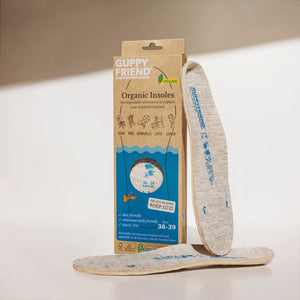
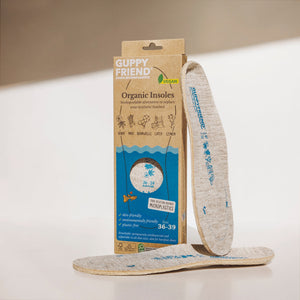
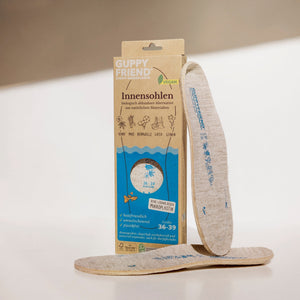
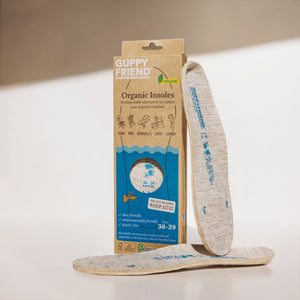
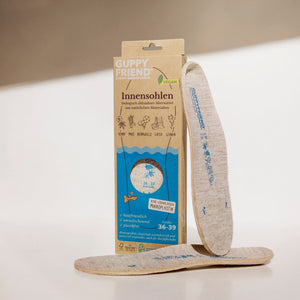
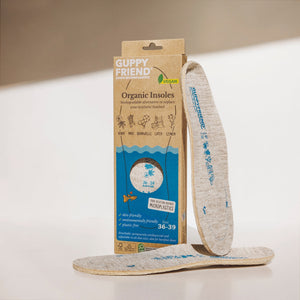
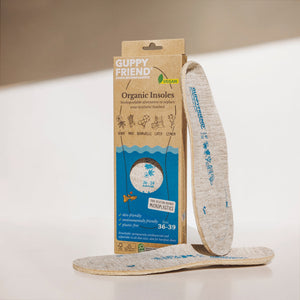
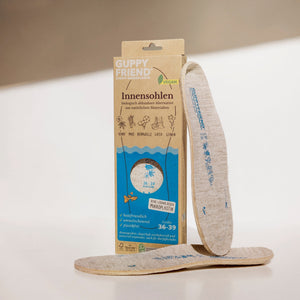
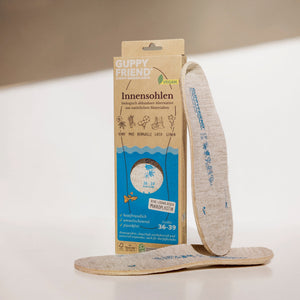
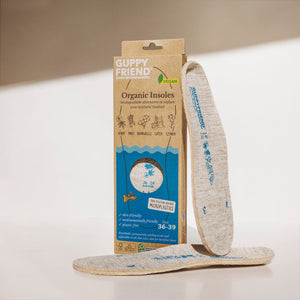
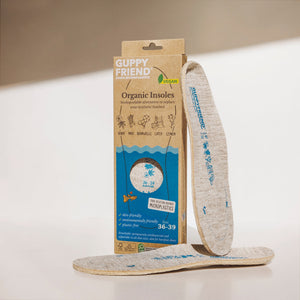
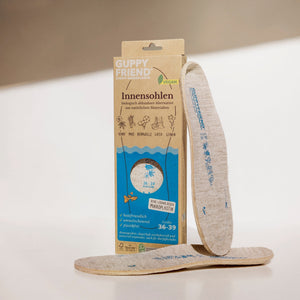
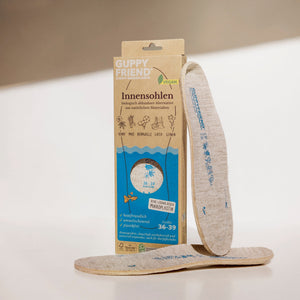
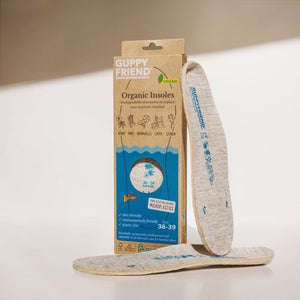
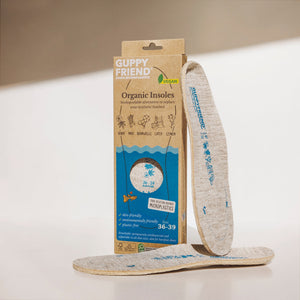
GUPPYFRIEND Organic Insoles

You're into plastic-free.

incl. VAT, plus shipping costs if applicable

Size: 36-39
Packaging Language: German

Delivery time: 1-3 working days (DE) | 2-6 working days (Europe)

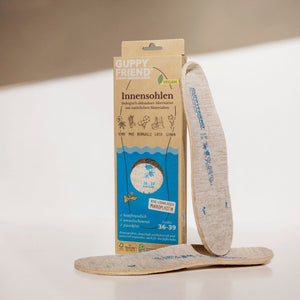
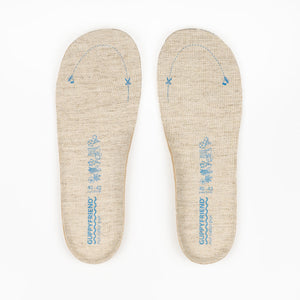
What's good for your feet and the environment? Precisely, the GUPPYFRIEND Insoles, your plant-based insole replacement. They are made from 100 % natural materials and reduce environmental pollution. Also, they contribute to a comfortable environment for your feet and are particularly kind to the skin. So, off you go: Cut the insoles to your shoe size and protect the environment and your health with every step.

  • Free from plastics, microplastics and toxic additives
  • 100% natural: natural latex, cotton, kenaf, corn and linen
  • Vegan, undyed and fully recyclable
  • Breathable and anti-bacterial against odours
  • Universally adjustable and skin-friendly

ecological

plastic free

protects the nature

Made in EU

GUPPYFRIEND insoles? Good choice!

GUPPYFRIEND insoles? Good choice!

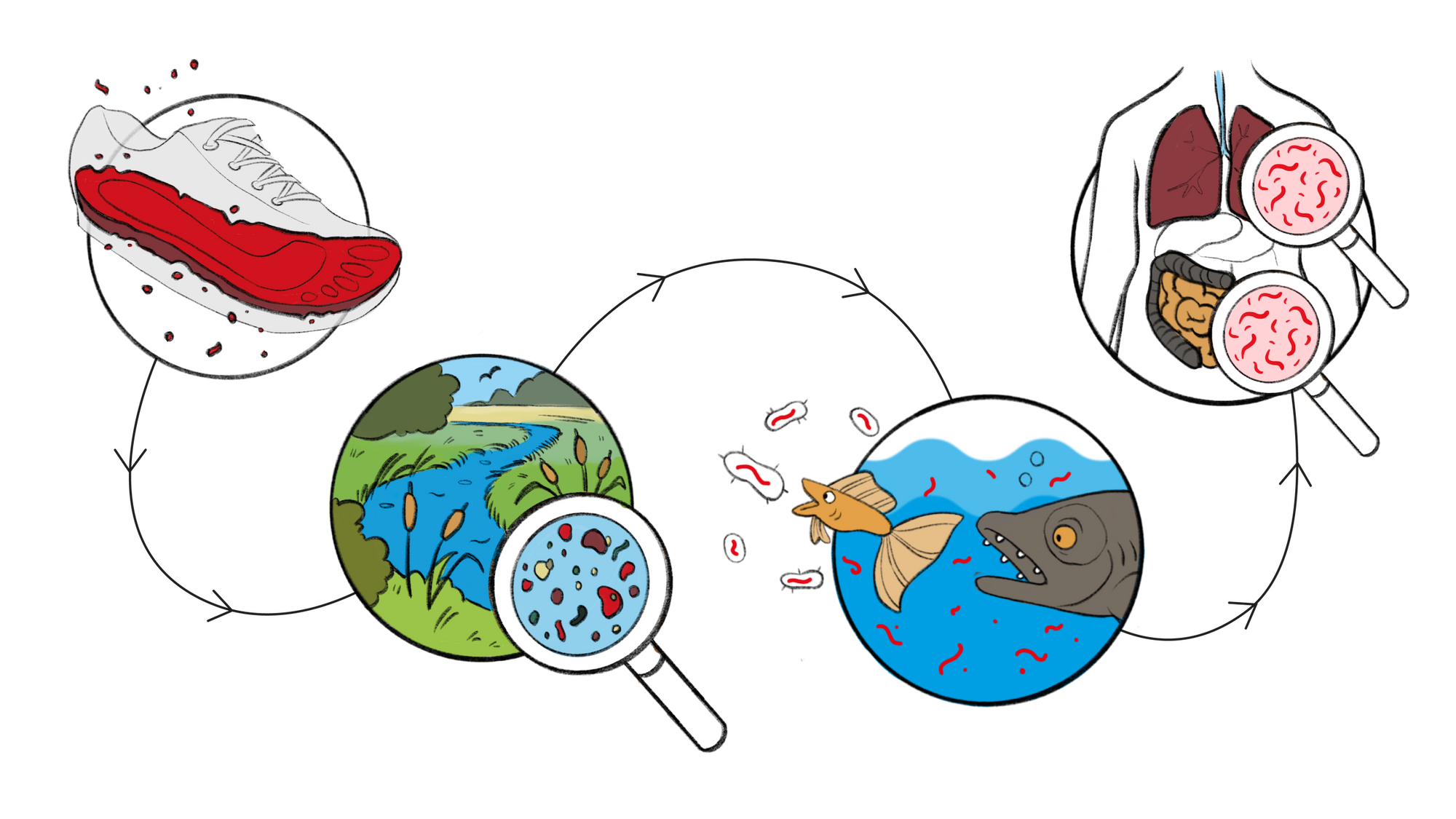
Are you into plastic on a palm-fringed beach? Neither are we. Unfortunately, microplastics are a reality on every coastline worldwide. You can find old rubber boots, masses of lonely flip-flops, and the occasional polyurethane insole. That stuff floats perfectly and ends up in places that you and I will probably never get to see. Nice for the sole, really bad for nature.

On their odyssey to the beach, the soles have left a long trail of pollutants and microplastics in the ocean. As we know, this harms marine life and our climate. We don't want that, do we?

GUPPYFRIEND insoles are good for both your feet and the environment. Furthermore, they are recyclable in the LANGBRETT closed-loop system. By using them, you become part of the cycle and prevent your soles from going on a world tour without you.

Are you into plastic on a palm-fringed beach? Neither are we. Unfortunately, microplastics are a reality on every coastline worldwide. You can find old rubber boots, masses of lonely flip-flops, and the occasional polyurethane insole. That stuff floats perfectly and ends up in places that you and I will probably never get to see. Nice for the sole, really bad for nature.

On their odyssey to the beach, the soles have left a long trail of pollutants and microplastics in the ocean. As we know, this harms marine life and our climate. We don't want that, do we?

GUPPYFRIEND insoles are good for both your feet and the environment. Furthermore, they are recyclable in the LANGBRETT closed-loop system. By using them, you become part of the cycle and prevent your soles from going on a world tour without you.

This is how the GUPPYFRIEND insole becomes your insole:

This is how the GUPPYFRIEND insole becomes your insole:

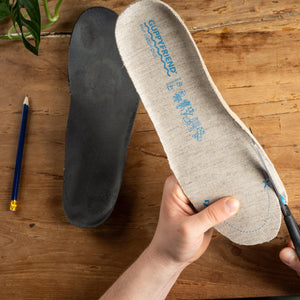
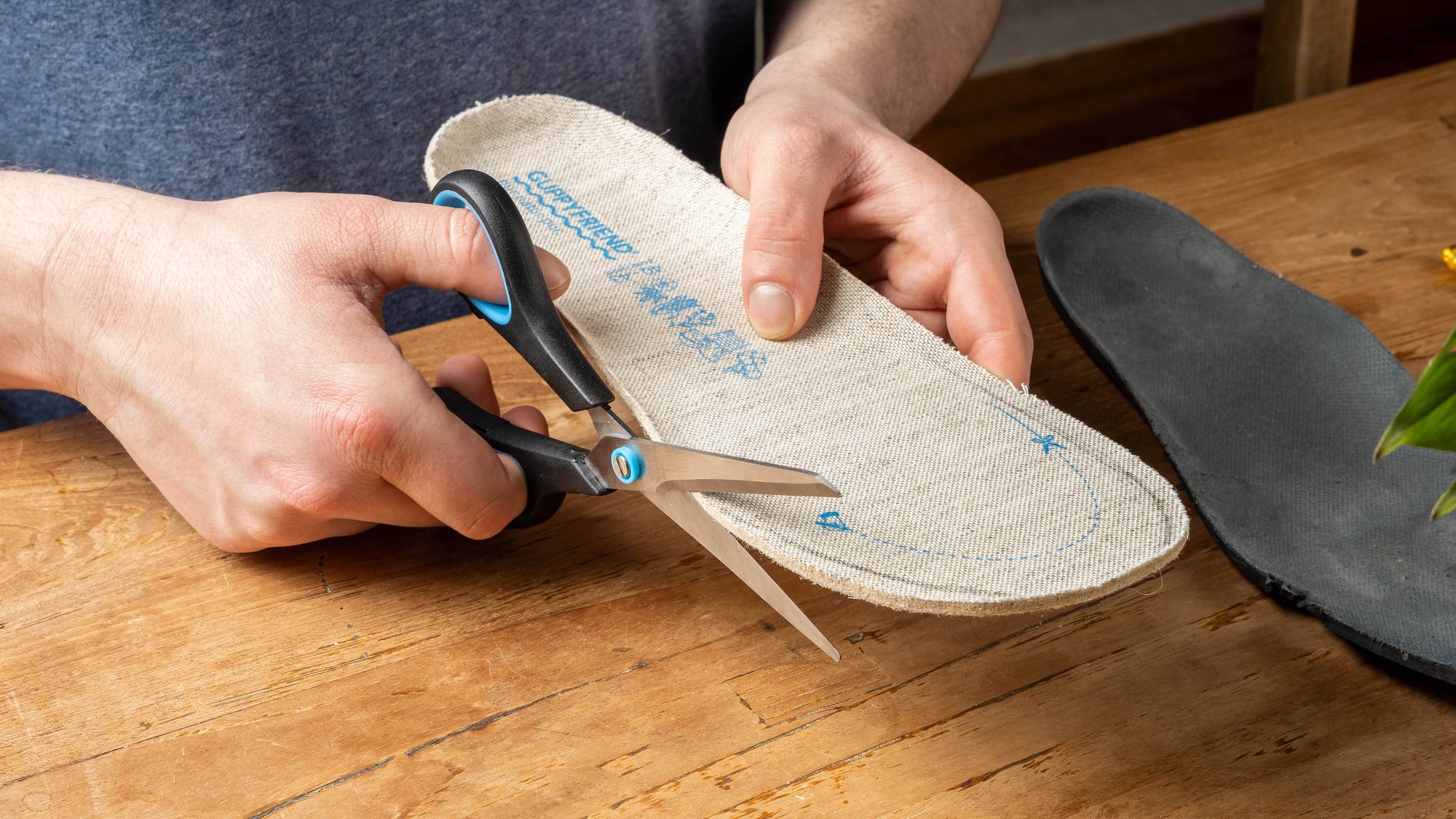
Our soles are available in three sizes for customization. Choose your model and turn it into your own individual insole. To do this, it’s best to take out your favorite shoes and use their soles as a template. What else do you need? Something everyone has at home: a pen and a pair of scissors. And what’s next? It’s simple—everything is done in five minutes. Ready? Let’s go:

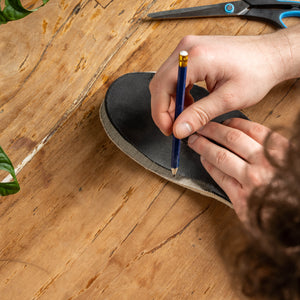
  • Place your old insoles on top of the GUPPYFRIEND insoles
  • Trace the outlines and cut along the line
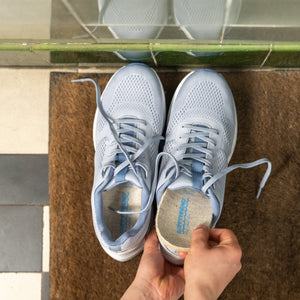
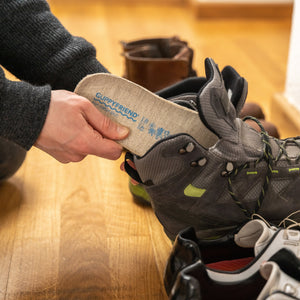
  • Insert the new soles and feel good

Our soles are available in three sizes for customization. Choose your model and turn it into your own individual insole. To do this, it’s best to take out your favorite shoes and use their soles as a template. What else do you need? Something everyone has at home: a pen and a pair of scissors. And what’s next? It’s simple—everything is done in five minutes. Ready? Let’s go:

  • Place your old insoles on top of the GUPPYFRIEND insoles
  • Trace the outlines and cut along the line
  • Insert the new soles and feel good

Questions & Answers

Shoe insoles are predominantly made from expanded foam sheets – usually polyurethane, or PU for short. Unfortunately, these thermally deformed materials have very limited resistance to water, heat, light, and sweat. Due to the conditions inside the shoe, such as the warm, humid climate and mechanical stress, the increasing abrasion of the foam material is unavoidable. Furthermore, these insole materials age rapidly and lose their mechanical durability after just a few weeks.

The biodegradable GUPPYFRIEND insoles consist of a natural latex foam core and 100% natural fiber felts with particularly high strength. During the production process, a linen-cotton textile cover is applied to the felt made of cotton, kenaf, and hemp fibers using corn starch. Thanks to this breathable construction and the naturally antibacterial materials, the GUPPYFRIEND insoles ensure a pleasantly dry shoe climate and also have an odor-reducing effect.

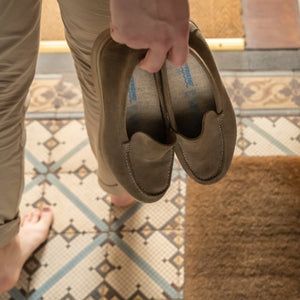
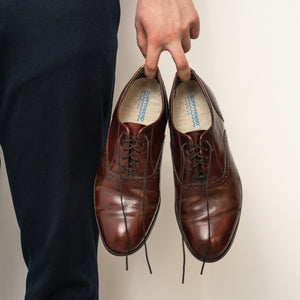
The GUPPYFRIEND insole can be universally adapted to the shape of your shoes by trimming it. It is not only suitable for everyday shoes, but also for barefoot shoes and all types of sports shoes, such as hiking, football, jogging, and cycling shoes.

GUPPYFRIEND insoles adapt to the shoe and provide light arch support.

Polyurethane ages. As soon as PU comes into contact with water or moisture, a chemical process called "hydrolysis" begins. In simple terms, it can be described as the cleavage of chemical bonds through reaction with water. Water (H2O) molecules split the PU polymer chains from the surface inward. Chemical additives can slow down this reaction. Nevertheless, the health concerns associated with these materials remain.

The chemicals polyol and isocyanate used to manufacture PU foam boards are extremely hazardous to the environment and health. Their transport, processing, and disposal can pose unpredictable risks.

Furthermore, the approval of the chemicals polyol and isocyanate requires numerous, long-lasting, and agonizing tests on mammals. We do not wish to be held partially responsible for these often-unmentioned "side effects."

Insoles continue to shed microplastics or can end up in the environment if not disposed of properly. Normally, they must be put in the residual waste because they are reliably incinerated there.  

However, we cannot say for sure: it is often unclear which chemicals are actually used in the soles. It might even be better to dispose of them as hazardous waste.

Search