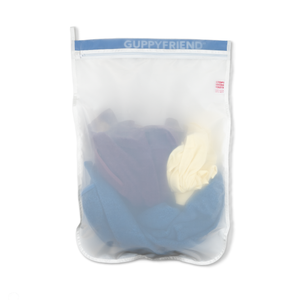
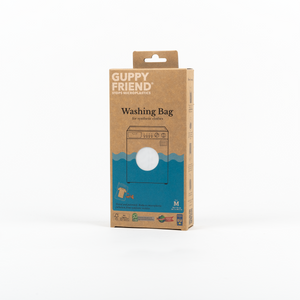
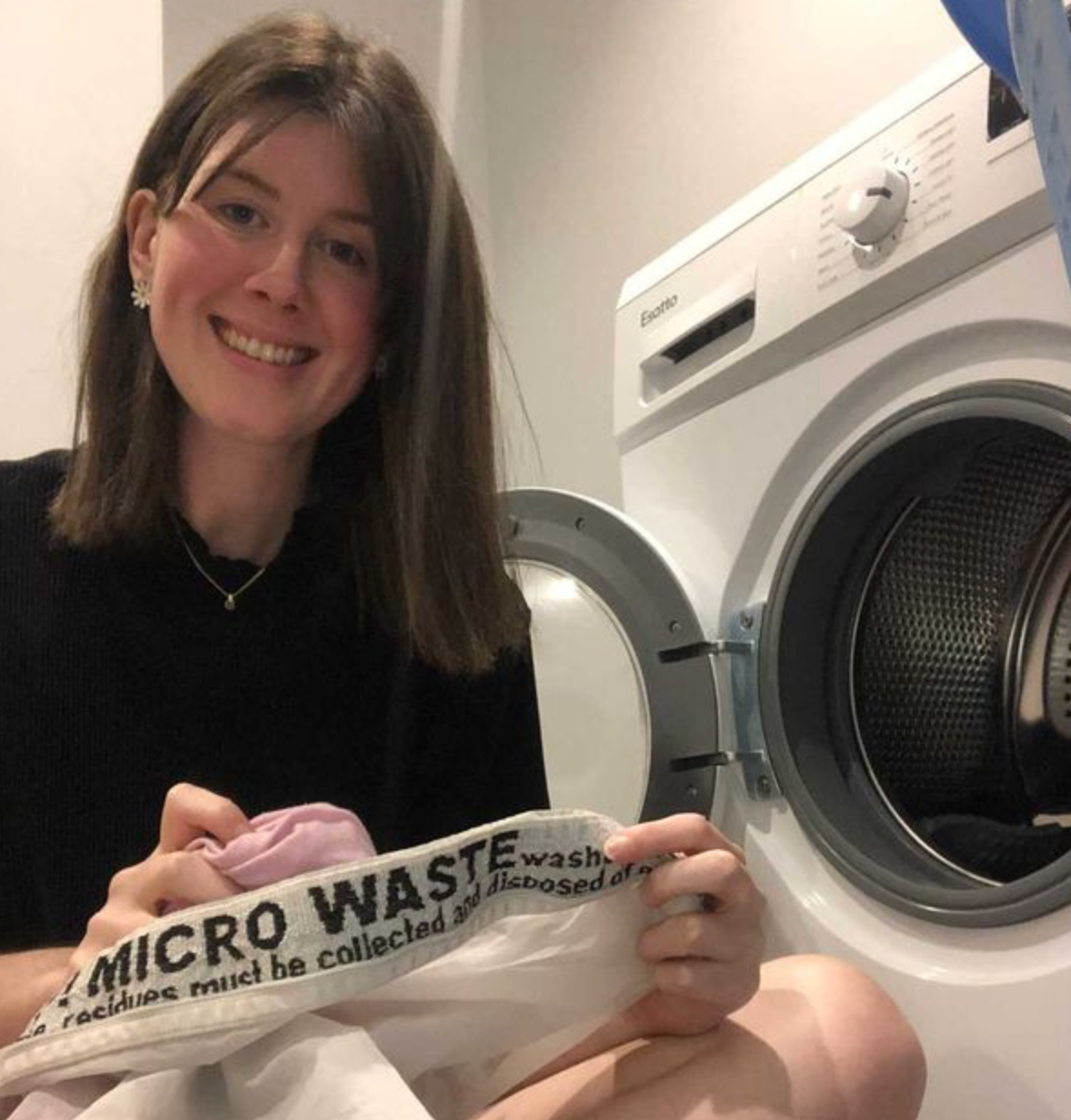
GUPPYFRIEND Washing Bag

Your solution to microplastics during washing

incl. VAT plus shipping costs

Delivery time: 1-3 working days (DE) | 2-6 working days (Europe)

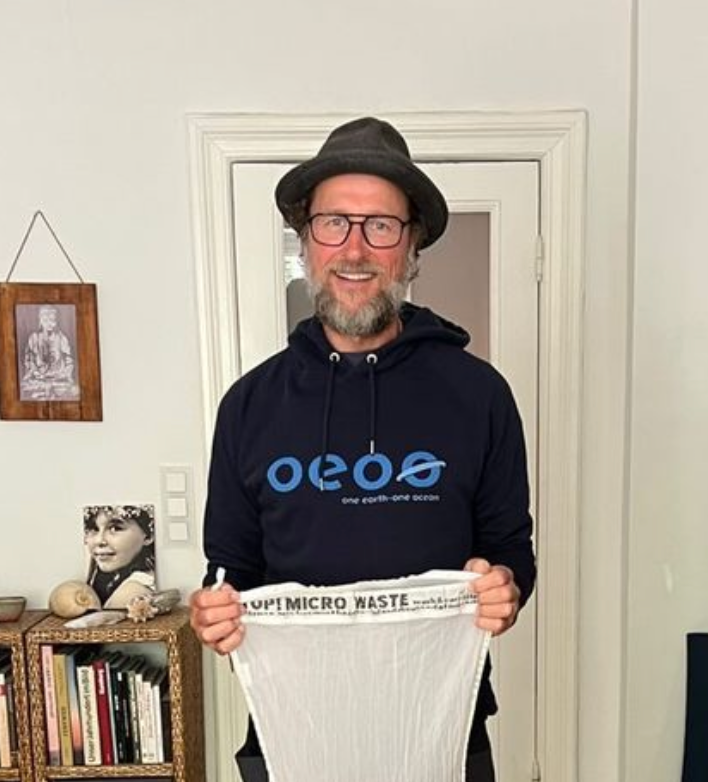
Synthetic fabrics lose microplastics, especially in your washing machine. The particles ultimately end up in rivers and oceans and harm nature and our health. With the GUPPYFRIEND Washing Bag, you can easily prevent this: It reduces fibre shedding during washing thereby protecting your clothes, and it reliably filters microplastic fibres out before they pollute water. Thumbs up! That’s good for you, your clothes and the environment.

  • High-tech filter material that doesn’t lose fibres itself
  • Reduces pilling and protects your clothes
  • Reminds us to adjust our washing and buying behaviours
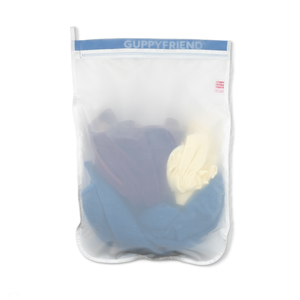
  • Size 50 x 74 cm

Guppyfriend getestet

tested

Guppyfriend patentierte Lösung

patented

Guppyfriend fair produziert

Protects nature

Guppyfriend ohne Chemikalien

Made in EU

The microfibre problem

The microfibre problem

Did you know that countless microplastic fibres break off from our clothes with every wash? These cannot be reliably filtered out by washing machines or sewage treatment plants, and so end up in our waterways.

The microplastic particles break down into ever-smaller pieces and accumulate toxins. They are ingested by fish and other marine life, which cannot distinguish the tiny plastic from their food. The consequences for animals and nature are serious.

And we are affected too: the plastic fibres from our clothes enter our bodies via our food.

Did you know that countless microplastic fibres break off from our clothes with every wash? These cannot be reliably filtered out by washing machines or sewage treatment plants, and so end up in our waterways.

The microplastic particles break down into ever-smaller pieces and accumulate toxins. They are ingested by fish and other marine life, which cannot distinguish the tiny plastic from their food. The consequences for animals and nature are serious.

And we are affected too: the plastic fibres from our clothes enter our bodies via our food.

How to wash with GUPPYFRIEND

How to wash with GUPPYFRIEND

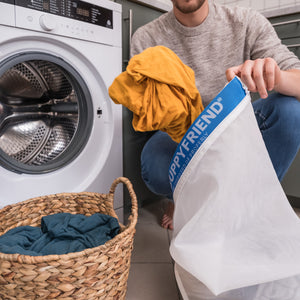
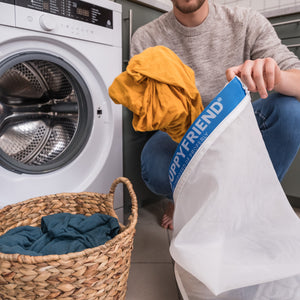
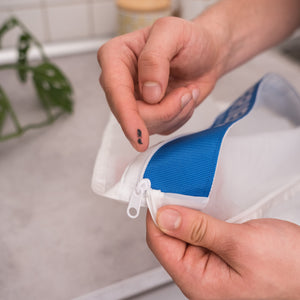
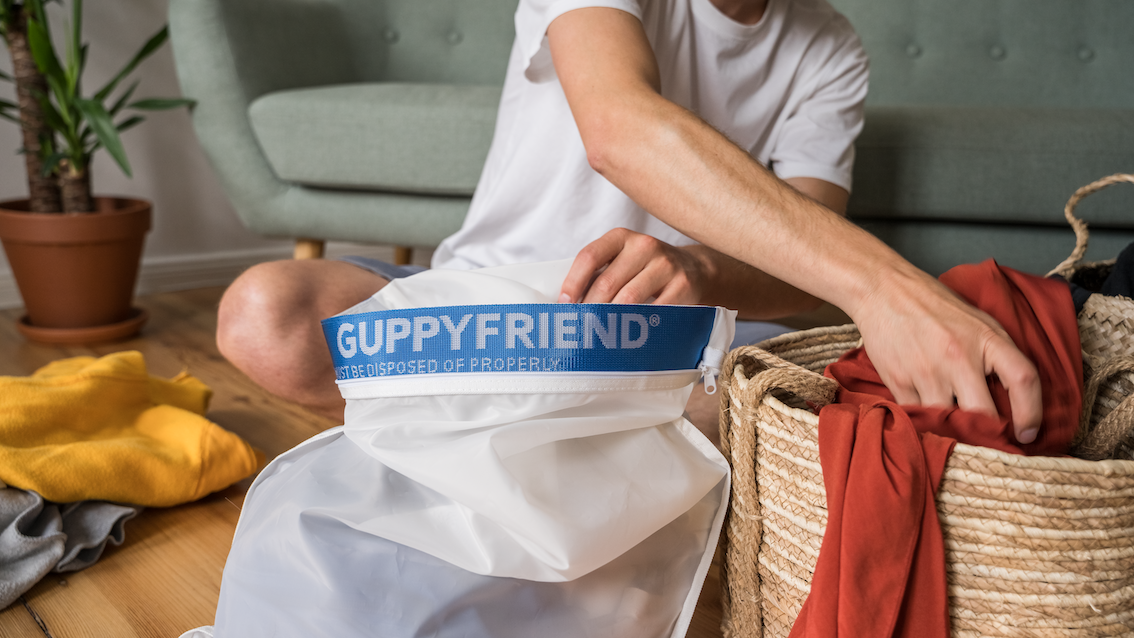
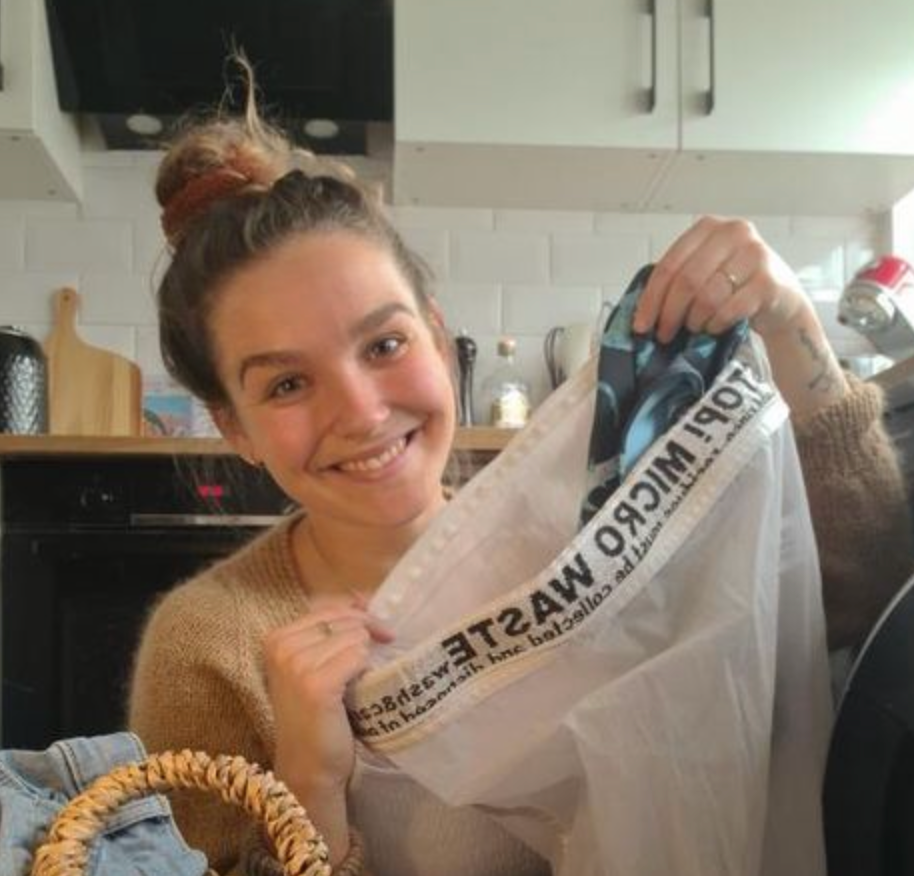
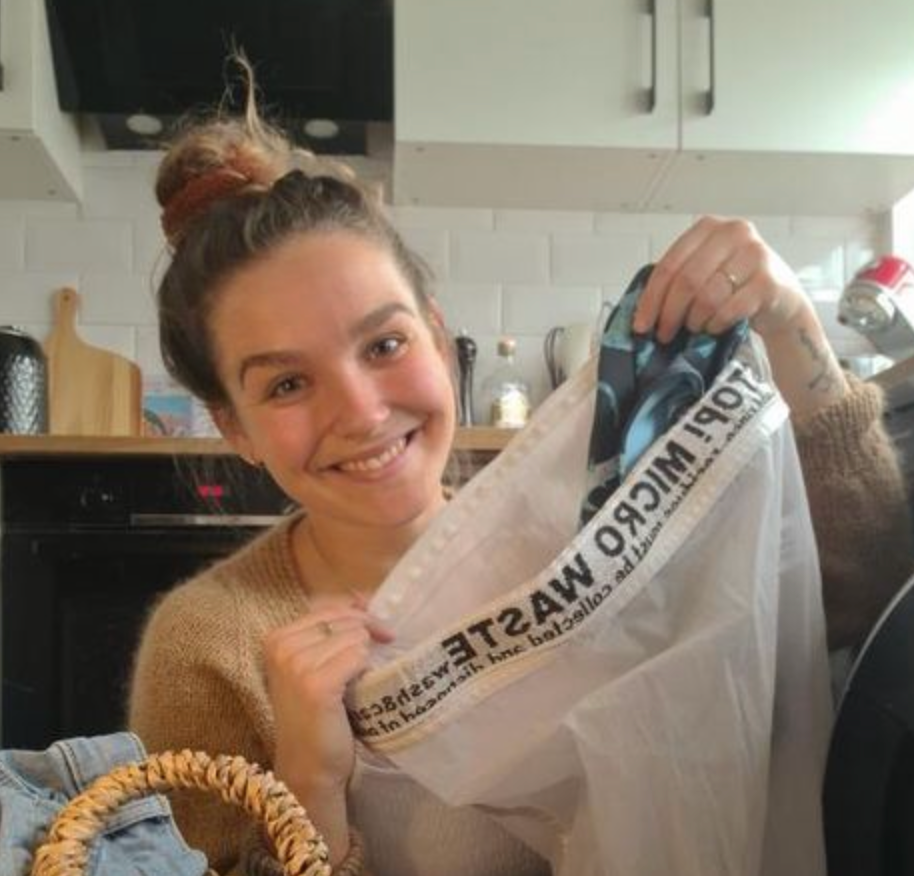
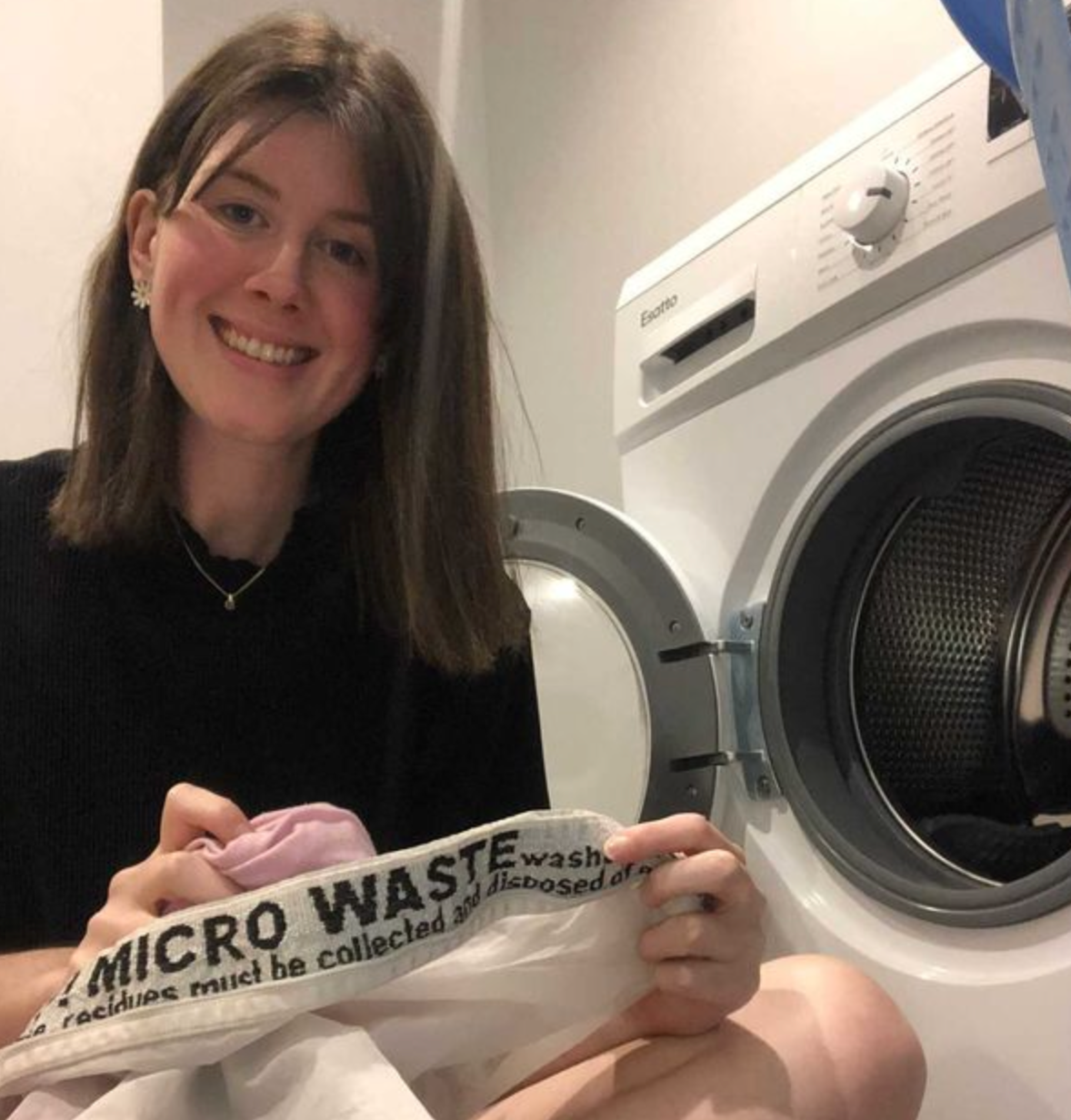
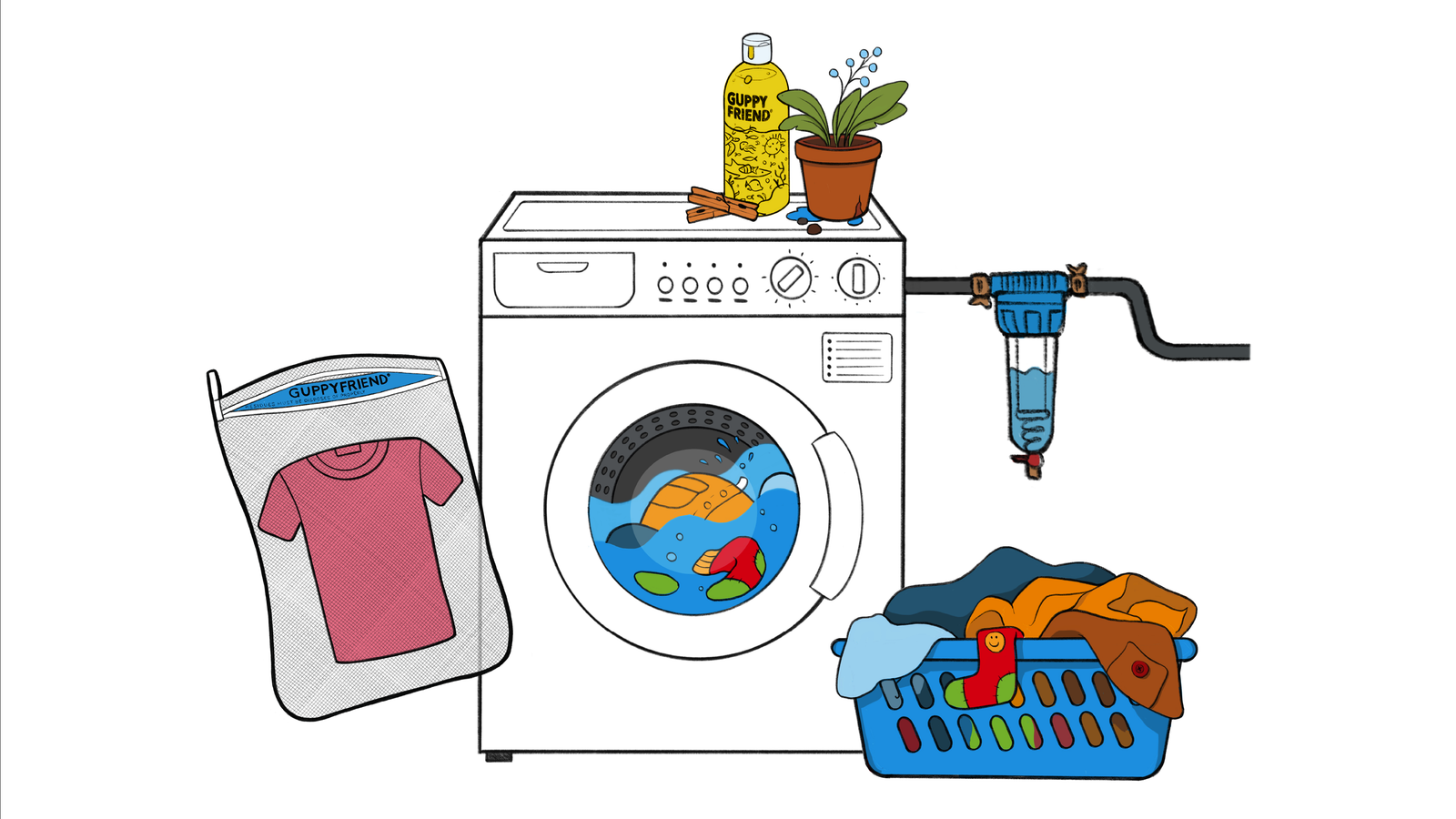
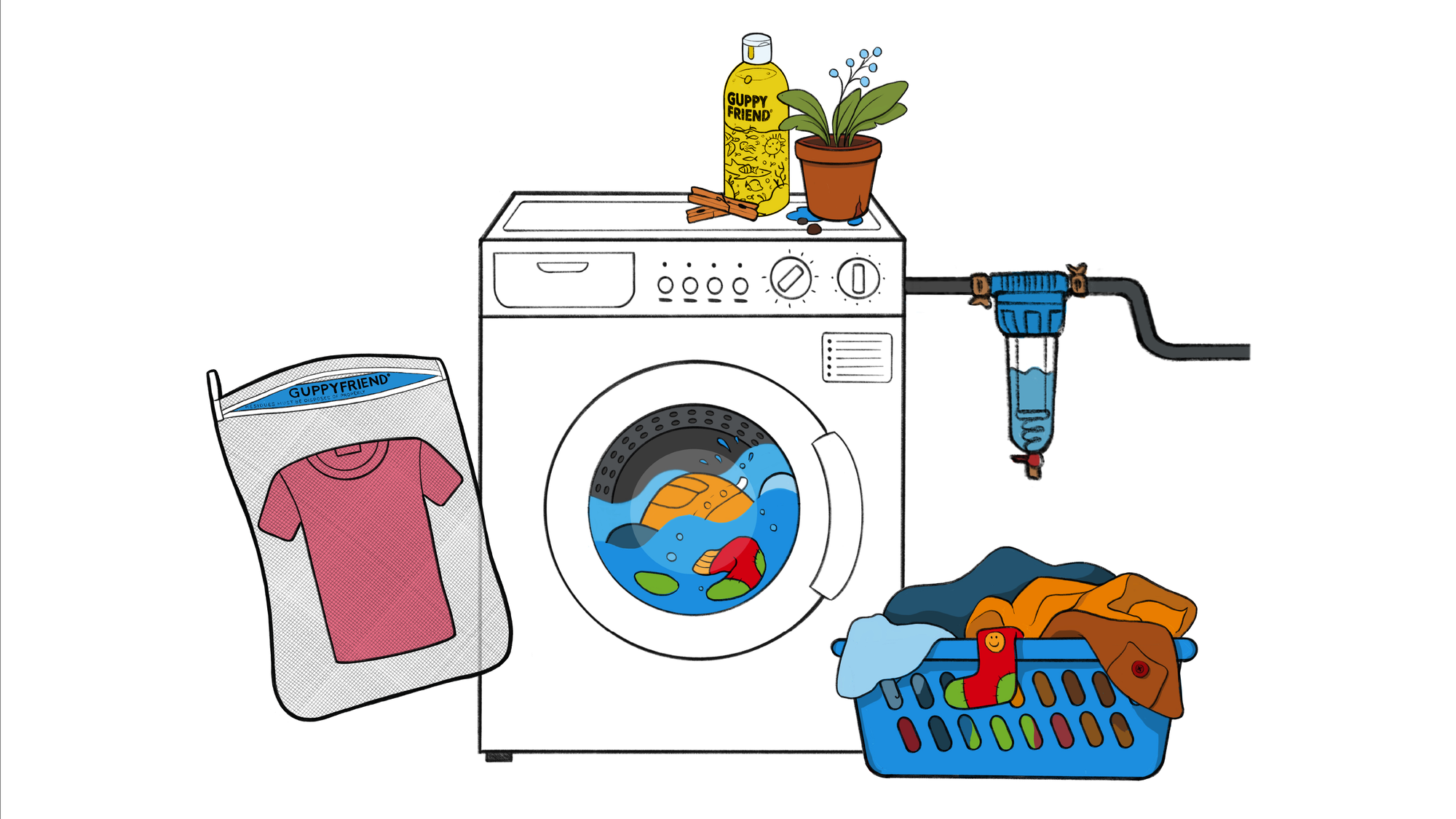
Place synthetic garments in the GUPPYFRIEND Washing Bag, close the zip completely and wash as usual with other garments at a maximum of 40°C. Then remove the clothes from the GUPPYFRIEND Washing Bag whilst still damp, remove the collected fibres from the hem and dispose of them in the general waste.

Place synthetic garments in the GUPPYFRIEND Washing Bag, close the zip completely and wash as usual with other garments at a maximum of 40°C. Then remove the clothes from the GUPPYFRIEND Washing Bag whilst still damp, remove the collected fibres from the hem and dispose of them in the general waste.

Wash Better with GUPPYFRIEND

Wash Better with GUPPYFRIEND

What else can you do? In general, the following formula applies to washing: Wash colder and less often. Liquid detergent compared to powder detergent leads to fewer broken microfibers because powder promotes abrasion. Wash hard and soft textiles separately and reduce the spin speed. Sounds complicated? It’s very easy. Our GUPPYFRIEND washing guide has detailed all the steps for you.

Also: Always filter the cleaning water! According to a study by the well-known Fraunhofer Institute, each of us produce on average 4 to 5 kilograms of microplastic per year. Our solutions, such as the GUPPYFRIEND Washing Bag, the GUPPYFRIEND Washing Machine Filter, the GUPPYFRIEND Bucket Filter and the GUPPYFRIEND Sink Filter, which help you to stop microplastics quickly and effectively at the source. Causing microplastic pollution because we are too comfortable with making a small change to our daily routines? Not with us! Thank you for your contribution to protecting the environment!

What else can you do? In general, the following formula applies to washing: Wash colder and less often. Liquid detergent compared to powder detergent leads to fewer broken microfibers because powder promotes abrasion. Wash hard and soft textiles separately and reduce the spin speed. Sounds complicated? It’s very easy. Our GUPPYFRIEND washing guide has detailed all the steps for you.

Also: Always filter the cleaning water! According to a study by the well-known Fraunhofer Institute, each of us produce on average 4 to 5 kilograms of microplastic per year. Our solutions, such as the GUPPYFRIEND Washing Bag, the GUPPYFRIEND Washing Machine Filter, the GUPPYFRIEND Bucket Filter and the GUPPYFRIEND Sink Filter, which help you to stop microplastics quickly and effectively at the source. Causing microplastic pollution because we are too comfortable with making a small change to our daily routines? Not with us! Thank you for your contribution to protecting the environment!

Questions & Answers

We developed the GUPPYFRIEND Washing Bag to help reduce the amount of microplastic fibres entering the environment. These break off, for example, when washing synthetic textiles (polyester, acrylic, nylon, etc.). It therefore makes sense to wash particularly these textiles in the bag. Fleece jackets, sportswear and outdoor clothing are often made entirely or to a large extent of synthetic fibres, but most other garments also contain a certain amount of synthetics. You can check the care label to see what your garments are made of. However, clothes made of pure cotton and wool can also be washed in the GUPPYFRIEND Washing Bag, because textiles made of natural materials also lose fibres. Washing in the GUPPYFRIEND Washing Bag significantly reduces fibre breakage and thus protects your clothes from wear and tear. You can enjoy your clothes much longer - another sustainable advantage of the Guppyfriend Washing Bag.

By the way: Unfortunately, synthetic fibres may even be present in clothes if they are not indicated on the care label. The rules for listing the components on care labels vary widely, thus a jumper labelled as 100% wool may contain up to 10% of synthetic fibres.

In our tests, the GUPPYFRIEND Washing Bag was washed at a maximum temperature of 40°C. Therefore, we do not recommend washing hotter than 40°.

In general, the warmer you wash, the shorter the life of your clothes. You can find more washing tips in our washing guide

When washing with the GUPPYFRIEND Washing Bag, an imbalance may occur during the spin cycle. To prevent damage to the washing machine, the spin cycle is often stopped automatically or the spin speed reduced. This can result in your laundry coming out of the washing machine very wet. To avoid this, it is important to always place the GUPPYFRIEND Washing Bag in the drum with additional items of clothing that do not contain synthetic fibres, or with another GUPPYFRIEND Washing Bag. This prevents imbalance and your washing machine should spin as normal again.

Please dispose of the collected microfibres in the residual waste. It is best to collect and dispose of the collected fibres in a closed container. This reduces the chance of the small and very light synthetic fibres being blown away during waste collection and to end up in the environment.

Microfibres do not belong in recyclable waste (yellow bin, yellow bag, green dot) because they cannot be recycled.

By the way: In Germany, residual waste is used to generate electricity and does not end up in landfills. The exhaust gases from waste incineration are filtered and 99% of them are non-toxic. If you don't live in Germany, you can check the Waste Atlas here http://www.atlas.d-waste.com to see what happens to the waste in your region.

If you follow our instructions for use, you can use your bag for many wash cycles. After a few washes, the washing bag won't look like new, but it will still do its job perfectly.

Short transport routes are important to us, which is why our GUPPYFRIEND Washing Bags are produced fairly and sustainably in Europe. Our filter fabric comes from Italy, the other materials from Portugal. Our sewing factories that produce the GUPPYFRIEND Washing Bag are located in Portugal und Poland. The design and printing of the packaging are made in Germany.

Although the GUPPYFRIEND Washing Bag is made from polyester, it does not shed any microplastics itself. This is due to the special structure of the yarn and its unique properties. The yarn from which our filter material is woven consists of a single strand, known as a monofilament. The yarn therefore resembles a sturdy rod that cannot unravel and release microplastic fibres. Furthermore, the single strand is round and smooth, and the material is particularly resistant to lye. This results in a very tough and stable fabric that does not wear away and is not damaged by detergents, for example.

Search