GUPPYFRIEND Bucket Filter

Deine Lösung gegen Mikroplastik im Hausstaub

inkl. MwSt. ggf. zzgl. Versandkosten

Packaging Language: Deutsch

Lieferzeit: 1-3 Werktage (DE) | 2-6 Werktage (Europa)

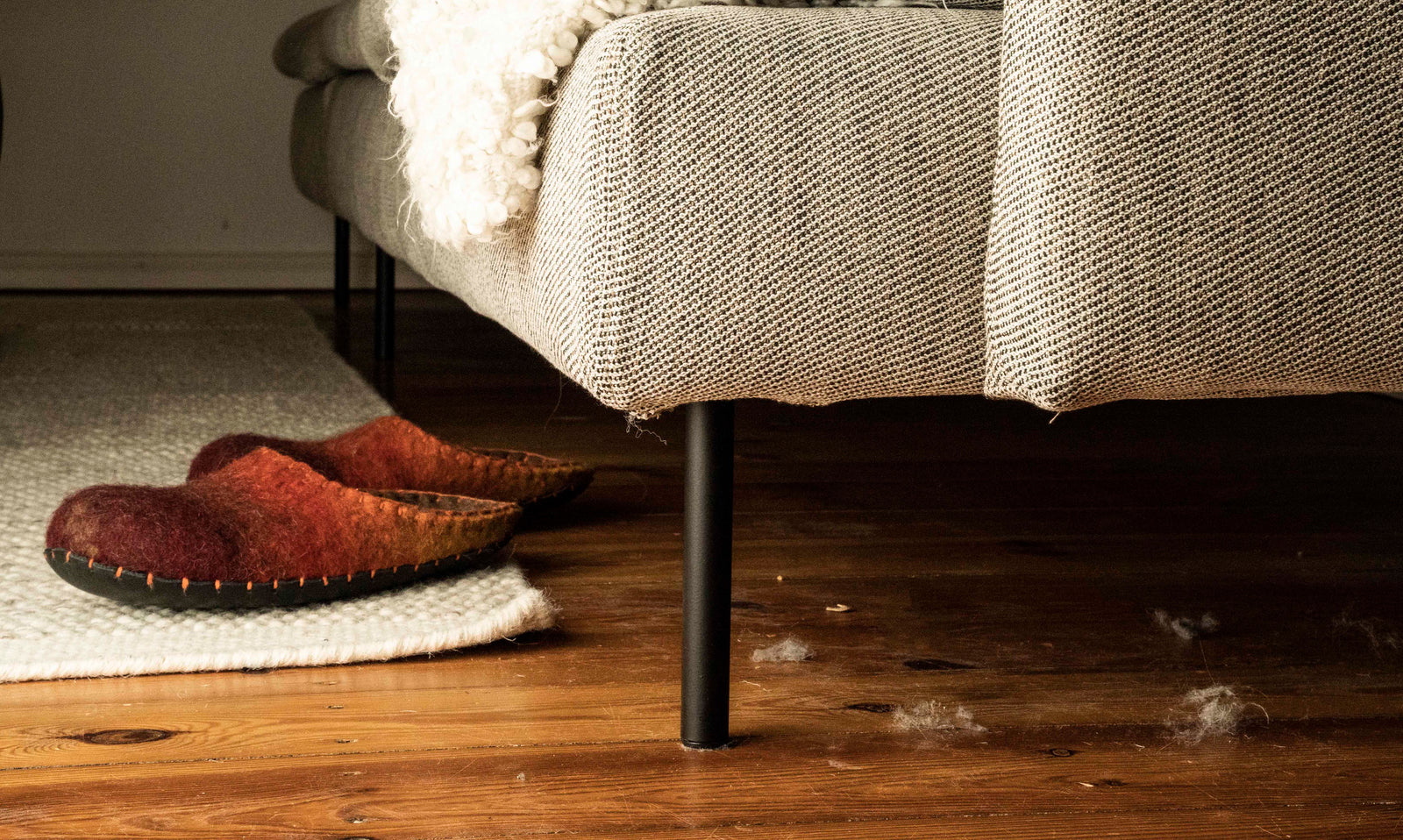
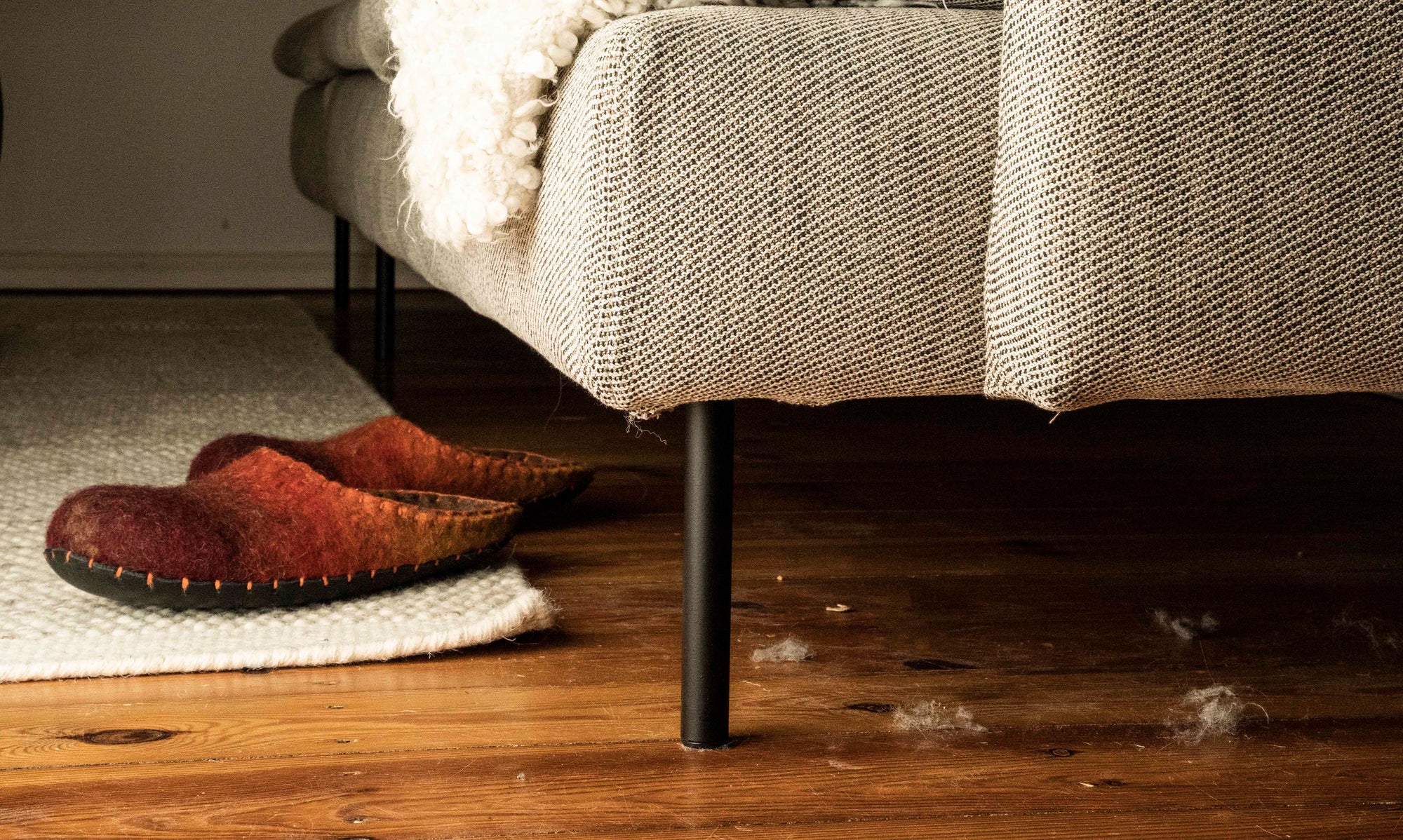
Your house dust is full of microplastics. Sad but true. This comes from many sources, such as carpets, curtains, upholstered furniture, clothing, blankets, and shoes. And when we pour our cleaning water directly down the drain, plastic particles from our homes end up in the environment. How can we stop this? Use the GUPPYFRIEND Bucket Filter! Easy to attach to the bucket, it reliably filters plastic particles from household dust. What do you think? No more cleaning without it!

  • It fits any conventional bucket
  • Durable and alkaline resistant
  • Fine laboratory filter fabric that doesn't lose fibers itself
  • Produced in the EU

Guppyfriend patentierte Lösung

patented

reduces microplastic-pollution

tested

Made in EU

staub unter sofa

What exactly is the problem?

What exactly is the problem?

Have you ever wondered what house dust is made of? We didn't know exactly either. That's why we had it analyzed in the laboratory: house dust contains a lot of microplastics! Unfortunately.

Scientific studies show that up to 11,000 fibers per day (!) and square meter settle as dust where we spend most of our time: at home. Most of these are plastic and chemical fibers, which we absorb in various ways and which end up in the environment through cleaning water.
As a reminder: microplastics are based on crude oil, natural gas, and chemical additives. This is not beneficial to your health, and as microplastics, house dust has no place in nature.

Have you ever wondered what house dust is made of? We didn't know exactly either. That's why we had it analyzed in the laboratory: house dust contains a lot of microplastics! Unfortunately.

Scientific studies show that up to 11,000 fibers per day (!) and square meter settle as dust where we spend most of our time: at home. Most of these are plastic and chemical fibers, which we absorb in various ways and which end up in the environment through cleaning water.
As a reminder: microplastics are based on crude oil, natural gas, and chemical additives. This is not beneficial to your health, and as microplastics, house dust has no place in nature.

Where does that come from?

Where does that come from?

In everyday life, small amounts of plastic particles and fibers are constantly released from synthetic materials through abrasion and use. This applies, for example, to kitchen utensils, clothing, shoe soles, curtains, and upholstery.

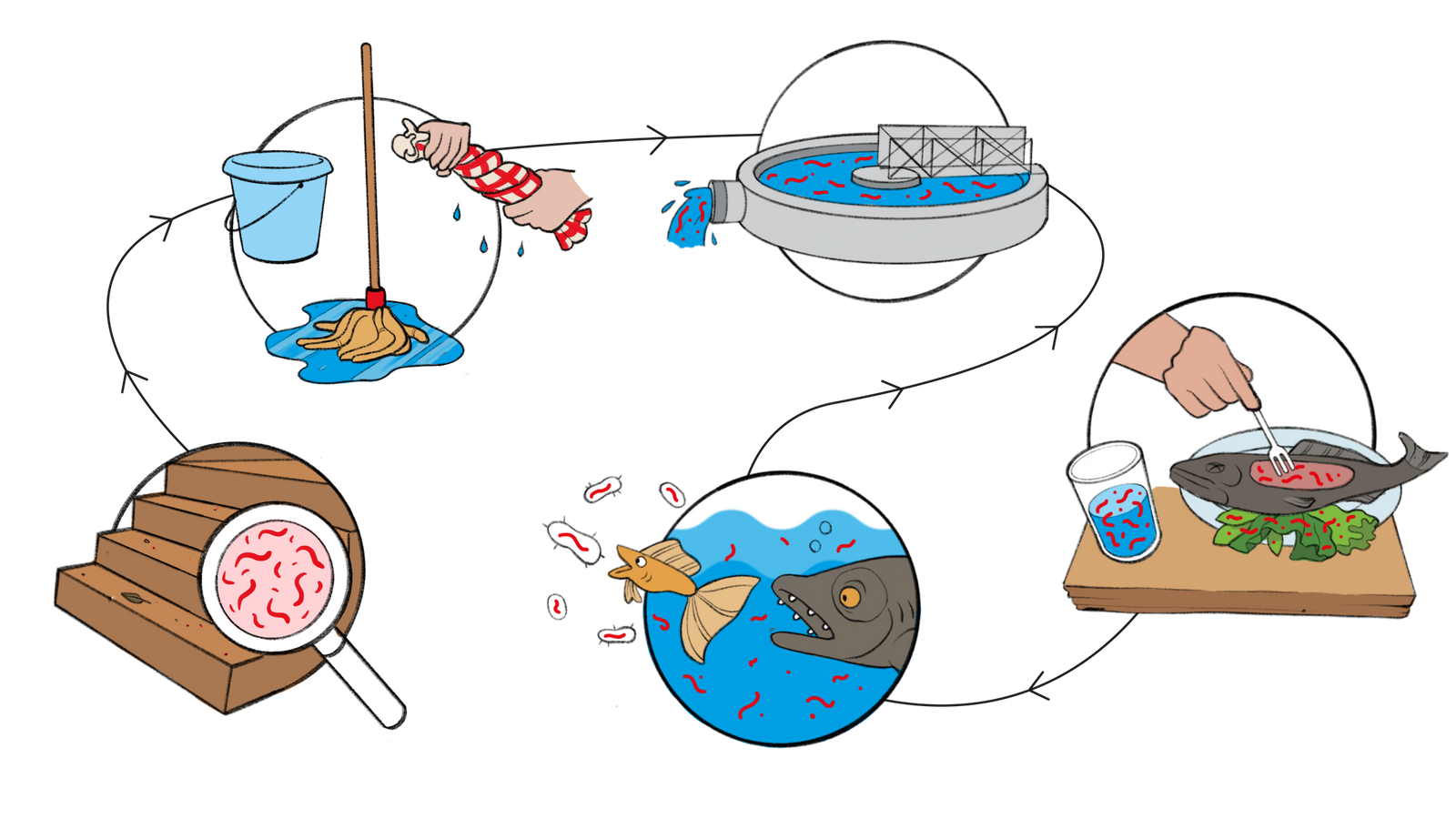
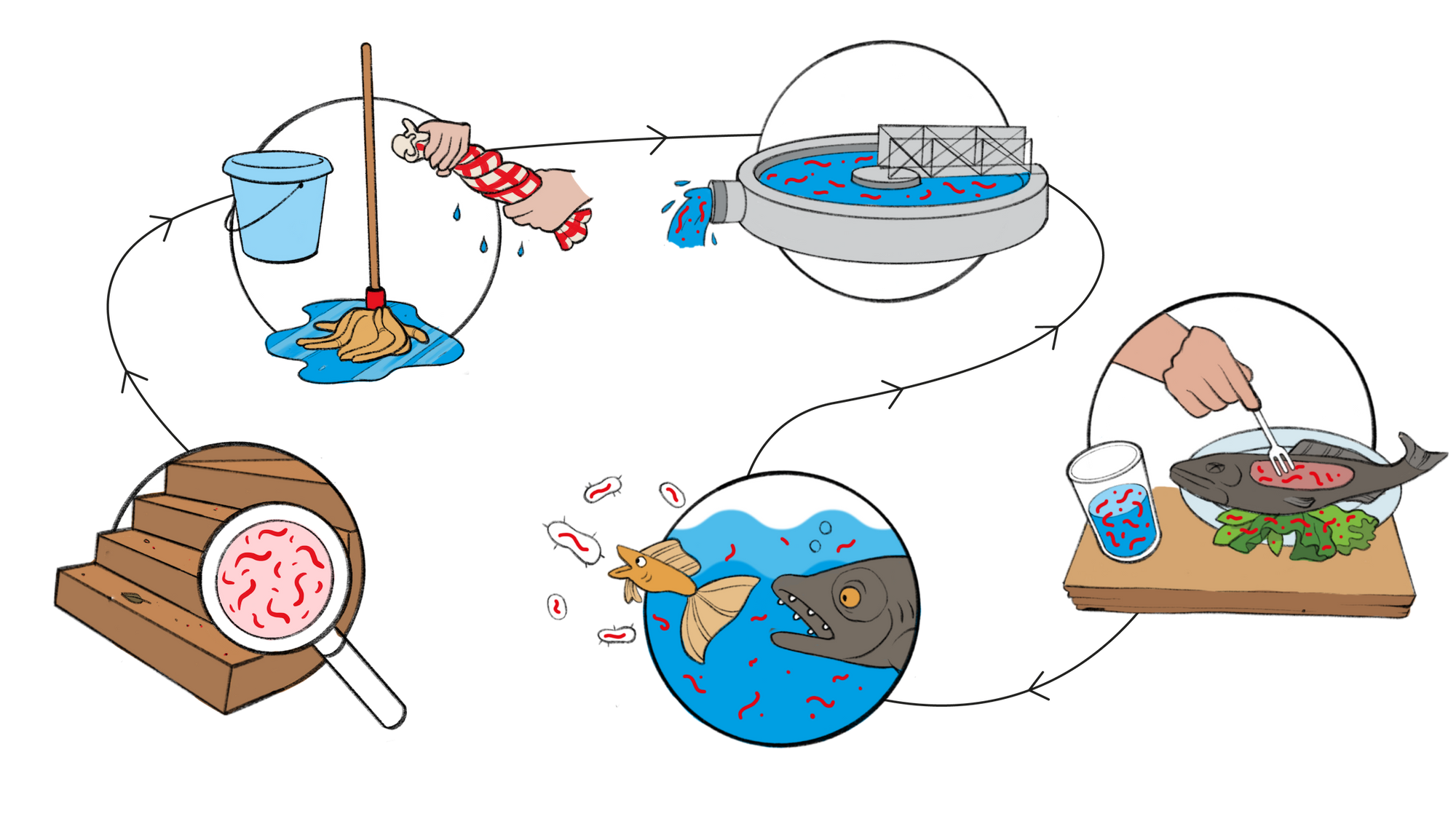
The result: A colorful cocktail of plastic and toxic chemicals, such as PFAS. Sounds fun, but it's no reason to celebrate. The only solution: roll up your sleeves and get the cleaning rag out. But be careful when pouring out the dirty water! Because even modern wastewater treatment plants cannot completely filter out these fine plastic particles and fibers. And even if they do, they end up back in the cycle as fertilizer in sewage sludge.

Not on our watch! Join in: Make your cleaning water microplastic-free.


Not on our watch! Join us: Make your cleaning water microplastic-free.

In everyday life, small amounts of plastic particles and fibers are constantly released from synthetic materials through abrasion and use. This applies, for example, to kitchen utensils, clothing, shoe soles, curtains, and upholstery.

The result: A colorful cocktail of plastic and toxic chemicals, such as PFAS. Sounds fun, but it's no reason to celebrate. The only solution: roll up your sleeves and get the cleaning rag out. But be careful when pouring out the dirty water! Because even modern wastewater treatment plants cannot completely filter out these fine plastic particles and fibers. And even if they do, they end up back in the cycle as fertilizer in sewage sludge.

Not on our watch! Join in: Make your cleaning water microplastic-free.


Not on our watch! Join us: Make your cleaning water microplastic-free.

Bild zeigt, wie Mikroplastik über den Hausstaub und durch Kläranlagen in Gewässer gelangt und schließlich wieder auf unserem Teller und in unserem Körper
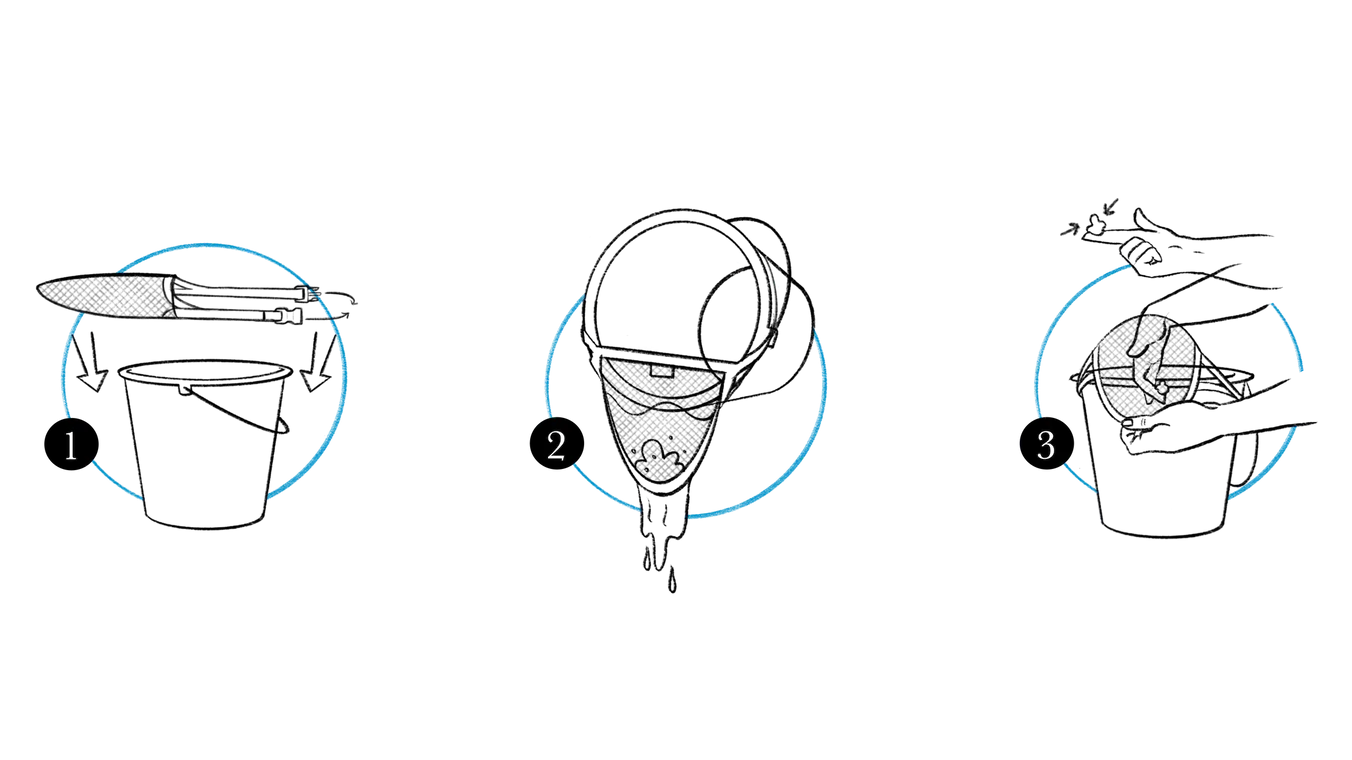
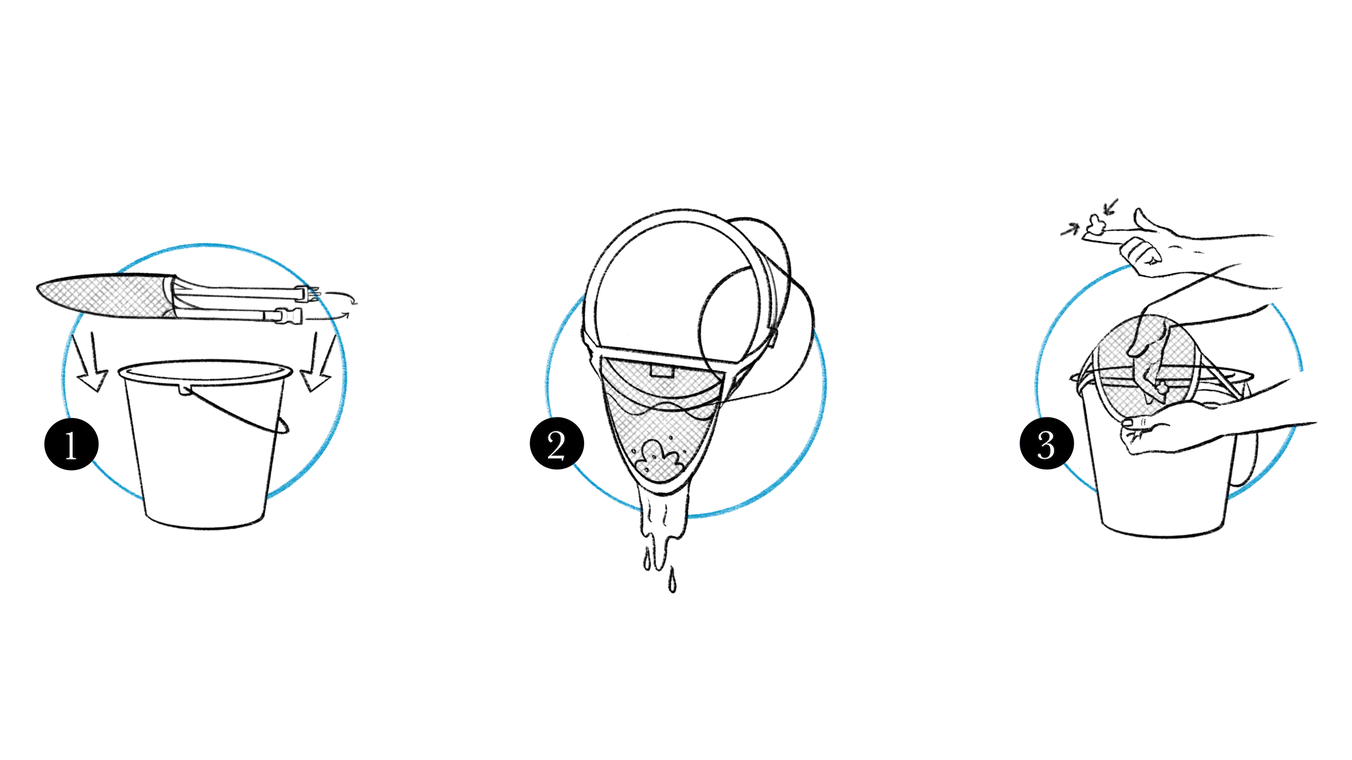
Bilderfolge zeigt, wie der Guppyfriend Eimerfilter um den Eimer gelegt geschnallt wird und der Eimerfilter genutzt wird.

How does it work?

How does it work?

  1. Wrap the blue band around the bucket and tighten it.
  2. Pour the cleaning water through the GUPPYFRIEND bucket filter into the drain.
  3. Dispose of the residue in the residual waste.
  1. Wrap the blue band around the bucket and tighten it.
  2. Pour the cleaning water through the GUPPYFRIEND bucket filter into the drain.
  3. Dispose of the residue in the residual waste.

FAQ

Microplastics are everywhere. Home textiles such as upholstered furniture, curtains, and carpets, but also surface coatings, clothing, and shoe soles, generate microplastics. The fibrous and particulate emissions, mostly caused by abrasion, aging, and sunlight, accumulate together with various natural materials like hair and skin flakes to form so-called 'dust bunnies'. The proportion of synthetics in house dust depends heavily on the materials present in the living environment.

Besides hair, skin particles, and mites, house dust consists primarily of plastic abrasion from carpets, blankets, upholstered furniture, curtains, shoe soles, textiles, and other objects.

It cannot be reliably filtered out by wastewater treatment plants, ends up in nature along with sewage sludge, and is responsible there for the emissions of climate-damaging ethylene and methane gases. Millions of tons of the smallest plastic particles are already destroying CO2 sinks on land and in the water. They can cause various cancers in humans and animals and are suspected of leading to reproductive disorders and thus to the extinction of important microorganisms. Before broken-off synthetic fibers and fragments break down into even smaller pieces, microplastics must be filtered out where they originate. Because all experts agree: microplastics simply do not belong in the environment!

The 'sludge' remaining in the bucket filter can be removed while damp and disposed of in the residual waste. After use, the filter surface can be cleaned with a cloth or a soft brush (natural bristles!). Attention: Please do not clean under running water!

In principle, yes. However, you shouldn't use just any cleaner, but rather make sure that yours is biodegradable and does not contain solid microplastics or liquid polymers. Surfactants from palm oil may be of natural origin, but we prefer clean soil and an intact rainforest. There are alternatives! Please always clean responsibly and also be careful not to bring the filter into contact with heavily overdosed, thick, or acidic cleaning solutions.

The 'sludge' collected in the bucket filter consists of a collection of various materials that should under no circumstances be released into the environment or returned to the material cycle. To avoid this, disposing of it in a sealed container in the residual waste is the safest solution.

Yes, they do. Wastewater treatment plants clean and filter our wastewater. However, there are at least three major problems:

Even modern wastewater treatment plants cannot completely remove microplastics. The smaller particles, in particular, are problematic. Studies show that significant amounts of microplastics can be found in rivers 'behind' (downstream of) the treatment plants.
The sewage sludge filtered out in the treatment plant is usually spread by farmers as fertilizer on fields, which leads to extreme microplastic pollution.
To avoid backflow into our households during heavy rainfall, unpurified wastewater contaminated with microplastics is sometimes diverted directly into rivers and lakes.

So, join in! Filter your wastewater! You are the last stop before the microplastics from your house dust make their way into nature!

For the GUPPYFRIEND bucket filter, we use an untreated, silicone-free, and particularly fine polyester laboratory filter mesh, which is characterized by its high alkali resistance. Since it is a monofilament, the filter mesh itself does not release any microplastics into the environment.

Search